
Turning Research into Real-World Impact: Dr. Catherine Nakalembe on Translational GeoAI
By: Monica Adjei | August 31, 2026
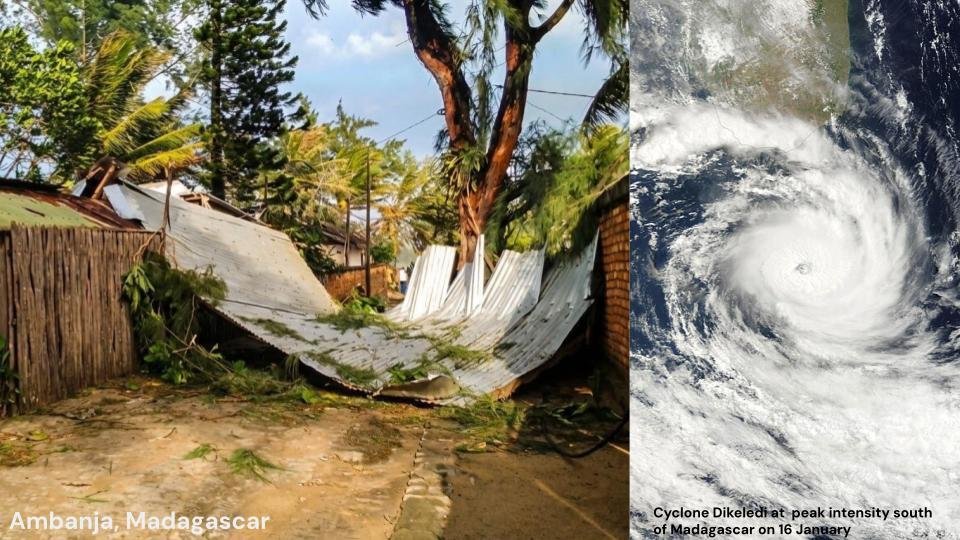
For the eighth edition of the IEEE GRSS Women in Africa webinar series, Dr. Catherine Nakalembe made the case for what she calls “Translational GeoAI Science: moving GeoAI methods from research settings into verifiable real-world application, rather than treating impact as an afterthought once a paper is published. Her premise was simple: even as Earth observation and AI let us watch and measure the reach of a flood almost as it unfolds, forecast droughts, and watch a cyclone form from space — she placed a satellite image of Cyclone Dikeledi in Madagascar beside a photo of the damage on the ground — there remains a vast gap between what we can measure and what actually reaches the people in harm's way.
That gap, she argued, is rarely about the science. It's about context. Tools built for U.S. farmlands often fail on Africa's small, intercropped fields; methods developed far from where the need is greatest struggle to survive once a project ends; and the scale of events routinely outdo the resources available to respond. Closing that gap means making information genuinely accessible, in the right language, through the right delivery channel, and connecting it to the people and institutions who actually make decisions.
She rooted the idea in the lab's work: the Helmets Labeling Crops project, which has gathered over five million street-level images to build crop-type data where little exists; the YieldWatch system, now forecasting crop yields for regional food-balance planning across several African countries; a volunteer-built network of soil-moisture sensors in Uganda, Kenya, and Tanzania to validate NASA's NISAR mission; and a drought-monitoring effort that fed directly into a government program supporting more than 450,000 people. A central theme in each is partnership, much of it, she noted, carried forward on relationships and trust rather than funding.
Perhaps her sharpest point was about honesty. She cautioned that research should be precise and understanding about how far their work truly reaches: the person who builds a tool is not the person who delivers the aid, and large inflated claims of impact help no one. With that, she brought to light another perspective: the person who develops a vaccine is not the same as the person who puts on protective clothing and travels to a village to administer it. "My map is not bringing the blanket," she said; it signals where the flood is, so that someone else can act. Therefore, knowing where the work stops, and who truly makes the difference, she suggested, is not a limitation but a source of strength.
In her ending note, she advised young researchers to immerse themselves. Go to the field. Stand in the place after the flood has passed and see how the map you were so proud of might mean very little in the middle of it. Sit with the department scrambling to bring water and food, and feel how far your work is from that moment. It can be humbling. But it is only from inside that reality, she said, that you begin to connect the dots – to understand what would truly help, and when. Otherwise, “it is a little like shaping a beautiful clay pot and leaving it out in the rain; it simply falls apart and becomes irrelevant”.
Watch the full talk: Turning Research into Real World Impact
