
Xylem Lab Graduate Students Showcase AI-Driven Food Security Research At Inaugural Aim Symposium
By: Monica Adjei | May 29, 2026
Three graduate students and researchers from the Xylem Lab represented the lab at the Inaugural AIM Research & Learning Symposium on May 5, 2026, at the Adele H. Stamp Student Union, University of Maryland. The daylong event, organized by UMD's Artificial Intelligence Interdisciplinary Institute at Maryland (AIM), brought together interdisciplinary teams from across campus to celebrate AI-driven scholarship in service of people and society, and the Xylem Lab arrived with two competitively selected posters.
Pradeep Kumar Yellapu and Umesh Adari presented, “Satellite-Based Crop Intelligence for Food Security Policy Decision-Making Across Six African Countries”, work developed with the broader lab team under the direction of Dr. Catherine Nakalembe. The poster introduced YieldWatch, a satellite-driven crop monitoring framework that fuses six satellite-derived signals to deliver regional yield forecasts for six East African countries – Kenya, Tanzania, Uganda, Rwanda, Malawi, and Zambia – months before harvest. Its AutoPilot engine takes it a step further – automating the entire bulletin generation pipeline, cutting what previously took analysts two to three working days down to under 30 minutes. The system is already operational, having been deployed at a capacity-building workshop in Nairobi in March 2026, where analysts from nine countries generated live, country-specific crop bulletins in real time.
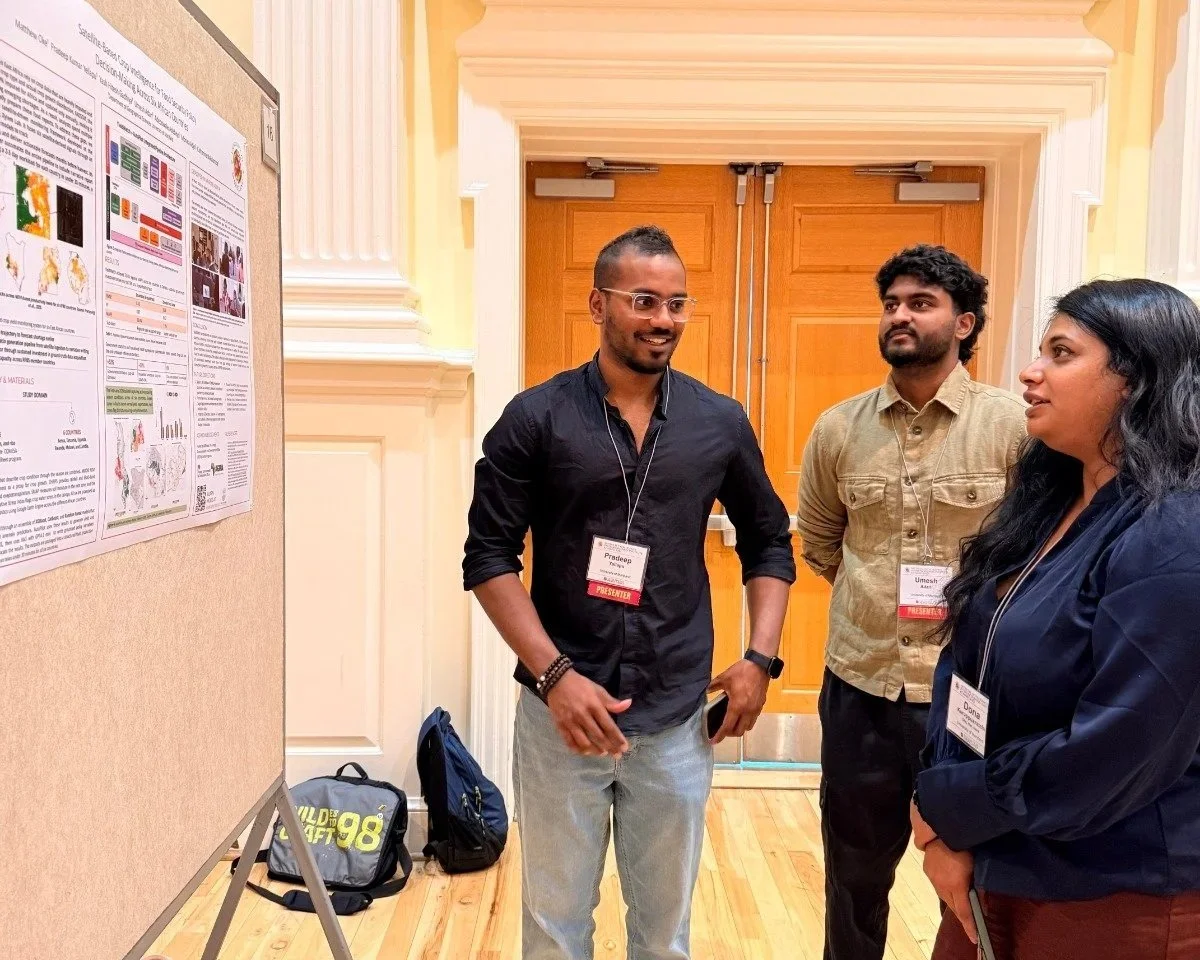
Pradeep Kumar Yellapu and Umesh Kumar Adari walk attendees through the YieldWatch/Autopilot pipeline during the poster session. Please see the poster below:
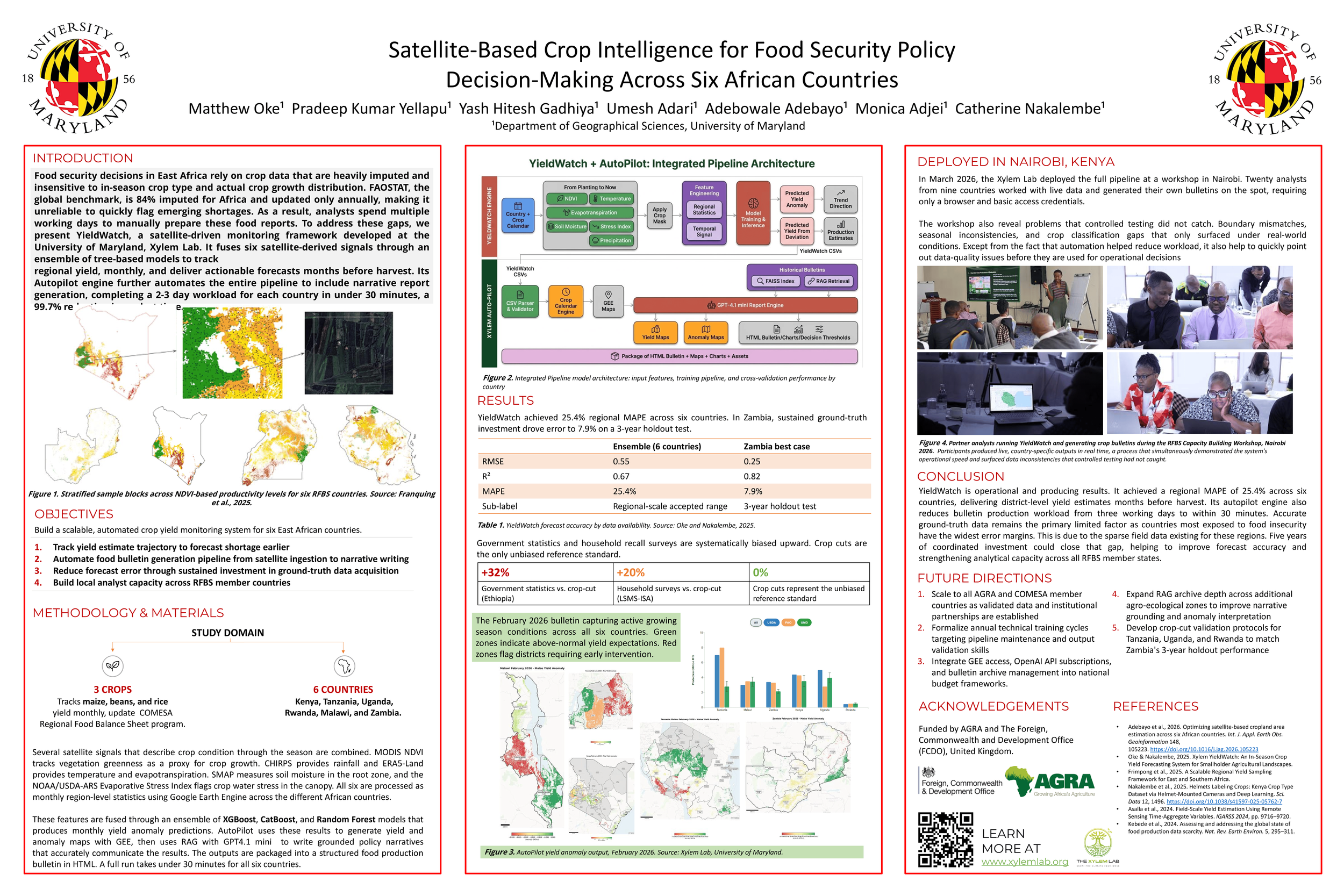
Poster: Satellite-Based Crop Intelligence for Food Security Policy Decision-Making Across Six African Countries
Abena Boatemaa Asare-Ansah presented “Mapping Agricultural Dynamics in Uganda's Refugee Hosting Communities Using AlphaEarth Embeddings”, under the direction of Dr. Nakalembe, in collaboration with Adebowale Adebayo, Xiaopeng Song, and Jamon Van Den Hoek of Oregon State University. This work examines cropland change across northern Uganda, a region hosting over 900,000 refugees, where rain-fed agriculture is the primary source of livelihood. Using machine learning and AlphaEarth satellite embeddings, the team built high-resolution cropland maps spanning 2017 to 2024, revealing interannual shifts in agricultural dynamics and filling critical gaps left by existing global land cover products
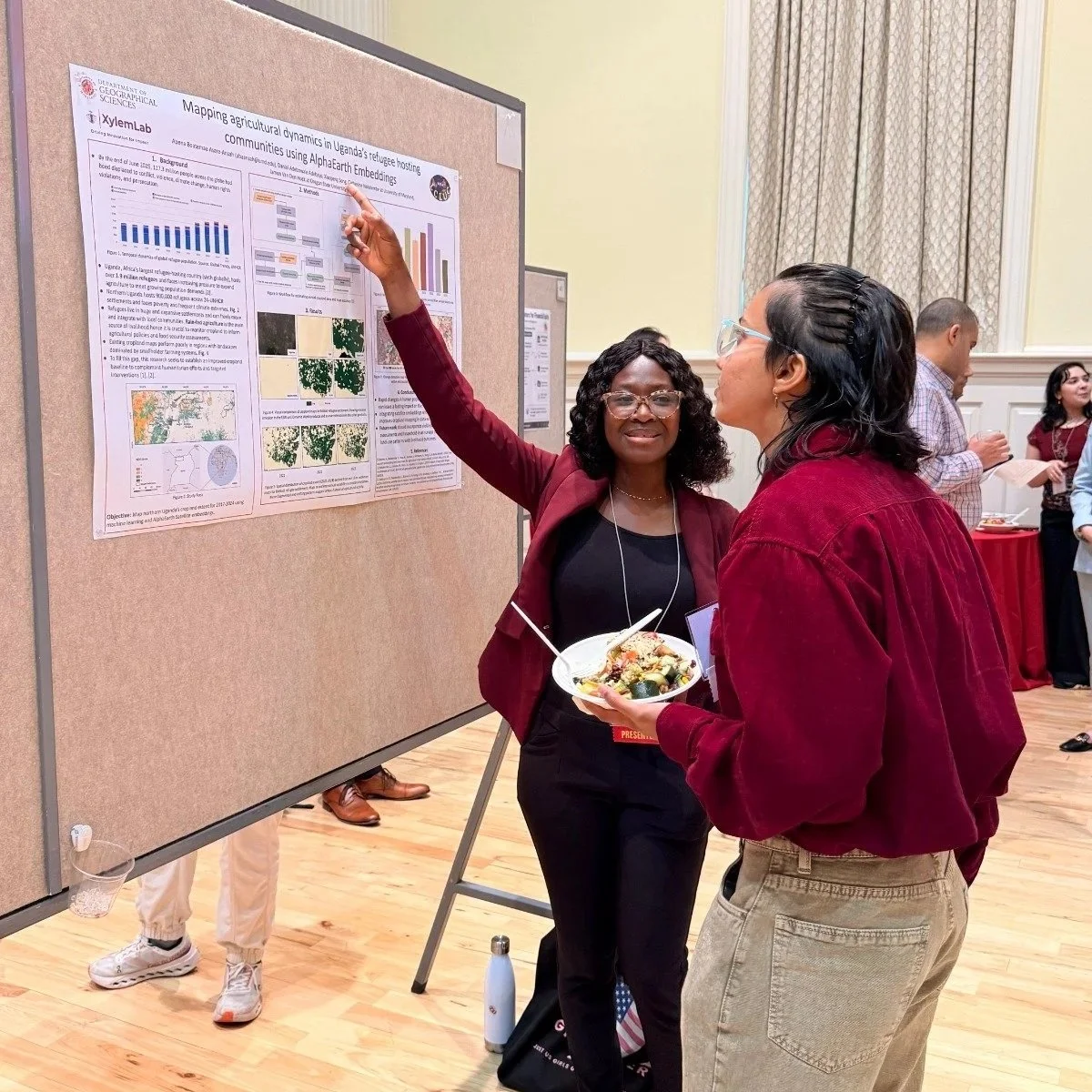
Abena Boatemaa Asare-Ansah presents her research on agricultural dynamics in Uganda's refugee-hosting communities. Please see the poster below:
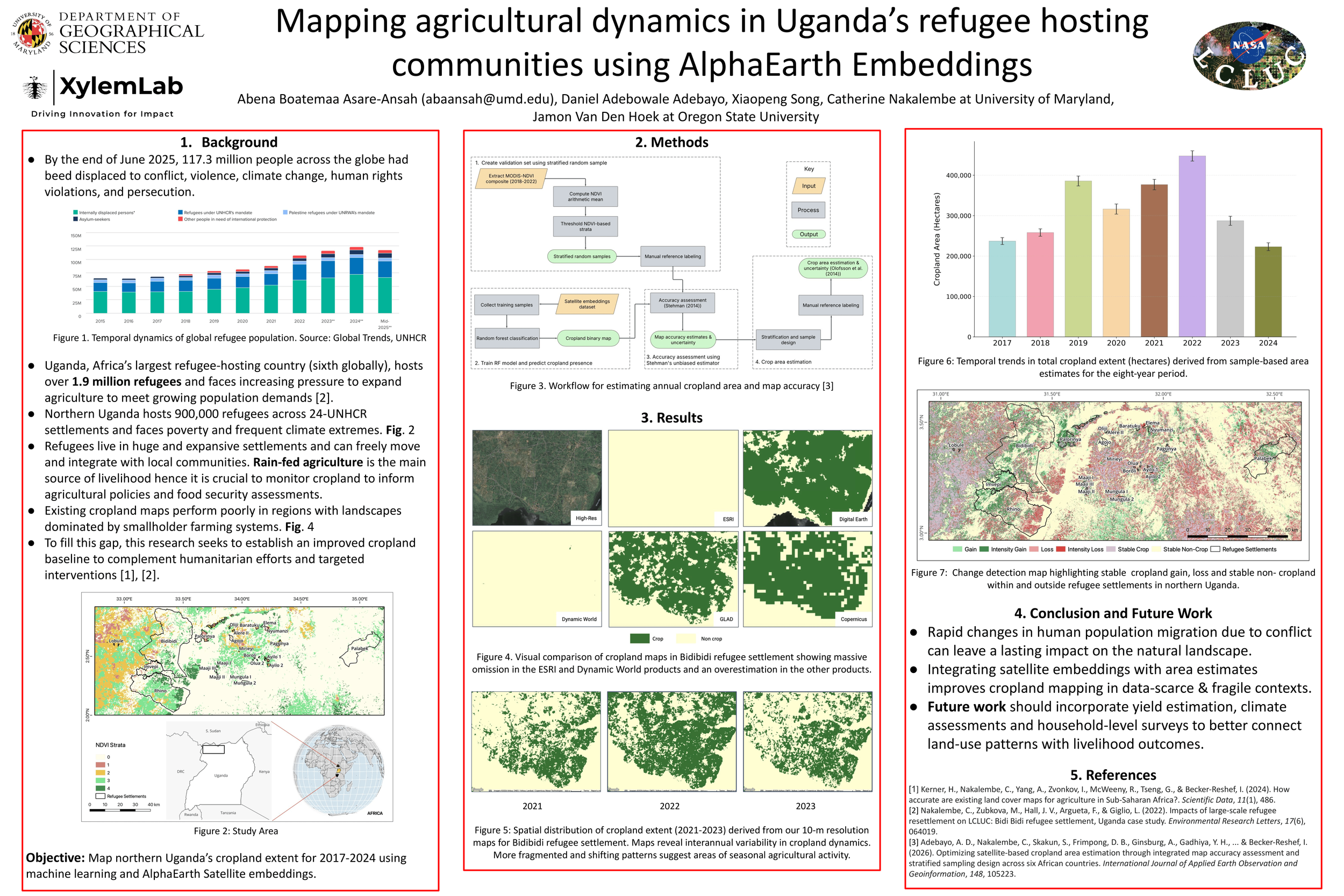
Poster: Mapping Agricultural Dynamics in Uganda's Refugee Hosting Communities Using AlphaEarth Embeddings. Asare-Ansah, Adebayo, Song, Nakalembe & Van Den Hoek, 2026
Both presentations reflected the lab's core conviction that satellite data, when thoughtfully designed and rigorously validated, can support decisions that matter. The lab's commitment to research that bridges satellite technology and real-world impact — from automating government food security bulletins across six East and Southern African countries to agricultural monitoring in some of the continent's most vulnerable communities. Under Dr. Nakalembe's direction, the XylemLab continues to advance work where it is needed most.
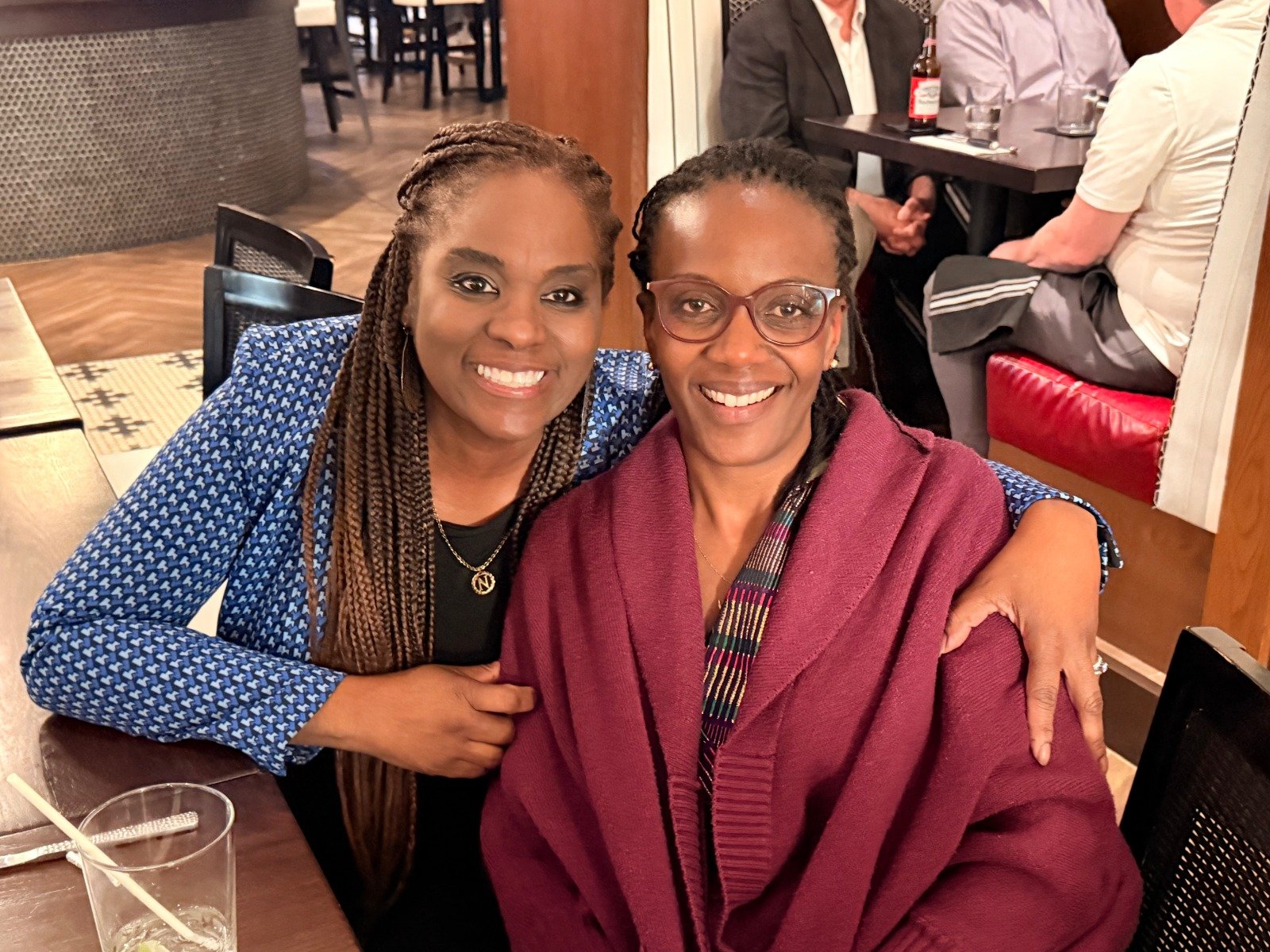
Assistant Professor in the Department of Geographical Sciences, NASA Harvest Africa Lead, and Xylem Lab Director, Dr. Catherine Nakalembe, with keynote speaker Dr. Nicol Turner Lee, Senior Fellow at the Brookings Institution and founder of the AI Equity Lab.
